


Creative Confidence That Lasts
Young minds learn early that a first attempt doesn’t have to be perfect. That single shift, trying, failing safely, and trying again, builds the courage to keep creating long after school ends.
Design thinking (opens in new tab) is a hands-on, human-centered process for solving real problems. Not a subject to memorize, but a skill to practice. It moves through a repeatable rhythm: understand the problem, imagine possibilities without fear of getting it wrong, build a rough first attempt, test it, and refine it based on what’s learned. It’s the same process used by innovators, engineers, and entrepreneurs everywhere.
At Adhyayan, we have adapted Design Thinking into hands-on “design challenges” that students work through again and again, until this way of thinking becomes second nature rather than a one-time lesson.
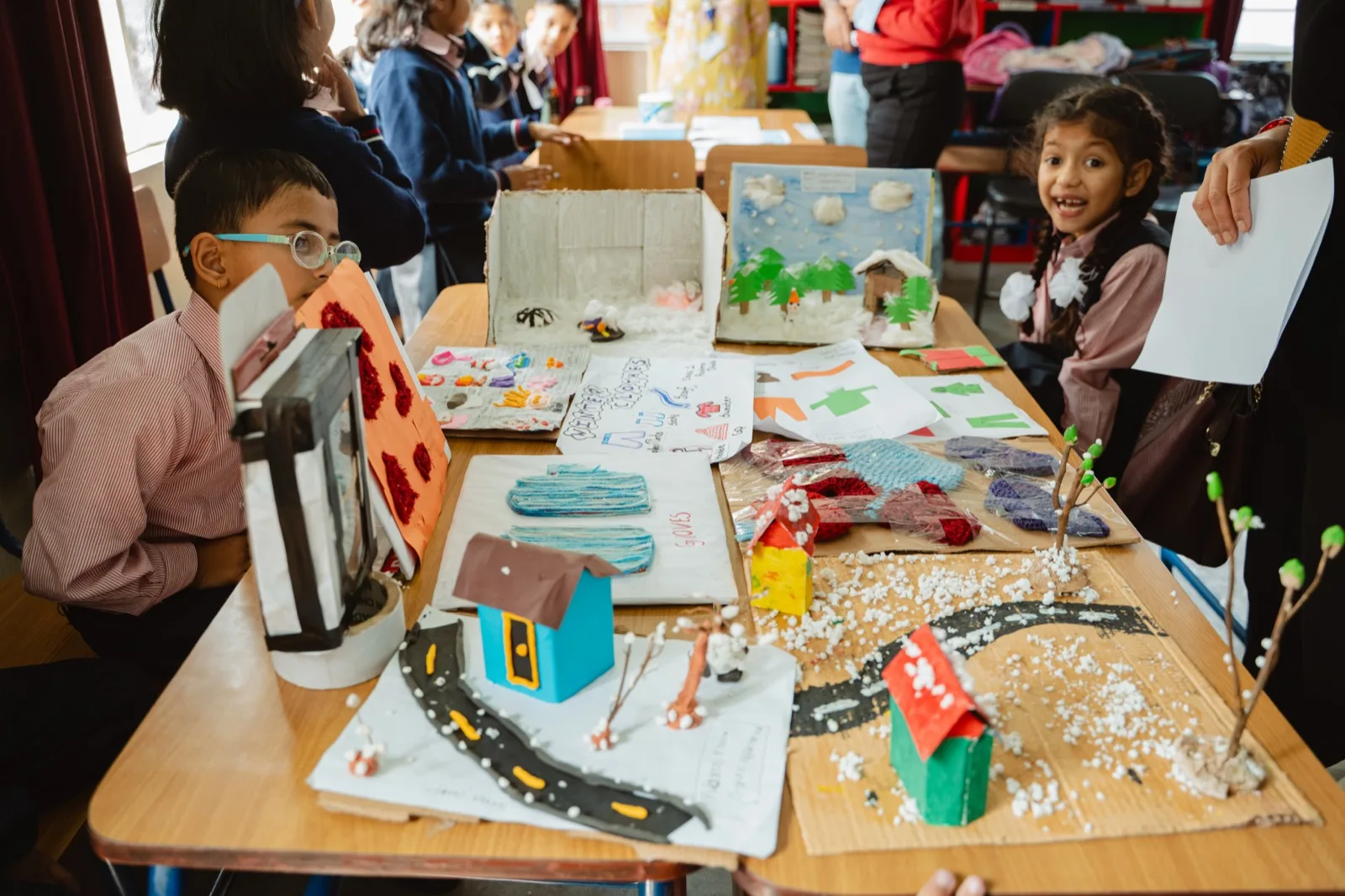
Young minds learn early that a first attempt doesn’t have to be perfect. That single shift, trying, failing safely, and trying again, builds the courage to keep creating long after school ends.
Students learn to listen, build on each other’s ideas, and navigate disagreement constructively—the same skills that define strong teams later in life.
Faced with open-ended problems, children learn to weigh options, anticipate consequences, and make thoughtful decisions instead of guessing.
Students learn to explain and defend their thinking persuasively, a skill that matters far beyond the classroom, from interviews to leadership.
Because problems are real and hands-on, students stay curious and involved, rather than simply absorbing information.
When learning feels like discovery instead of repetition, satisfaction and motivation follow naturally.
Teachers get to know how each child thinks and creates, not just what they can recall, thus enabling more personalized guidance and support.
Just as design thinking evolves with practice, so does our teaching, ensuring that your child is always learning in ways relevant to today, not yesterday.